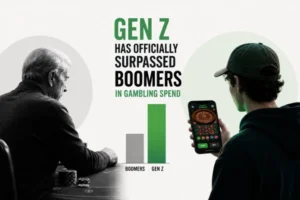
Gen Z Has Officially Surpassed Boomers in Gambling Spend

Most Americans born between 1997 and 2012 (Gen Z), are gambling on casino, sportsbooks and sweepstakes platforms with greater frequency than any other generation especially the Boomers. Gen Z represents the largest group of people that have been identified by age as being responsible for the continued expansion of the... Show more

genz.guide

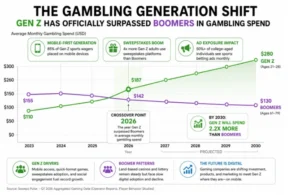
Gen Z vs. Boomer Gambling Spend: At a Glance

MetricGen Z (Ages 21-28)Boomers (Ages 61-79)
Avg. Monthly Spend on Gambling$187.00$142.00
Primary Gaming PlatformMobile sportsbook / sweepstakesLand-based casino / lottery
Percent of Gamblers Online61%22%
Sweepstakes Casino Adoption38%9%
Sports Betting Participation48%14%
Preferred Games / FormatsSlots, parlays, live dealerSlots, bingo, lottery
YoY Spend Change (2025-2026)+34%-3%

genz.guide2

How the Crossover Happened

The transition to online gaming wasn’t immediate. Three factors were trending together as they affected the rapid progression of gaming into 2024-25 and eventually beyond that toward its tipping-point in 2026.

  1. Mobile first access reduced barriers to entry: As the first generation to come of legal gaming age, Gen Z entered the market with a smartphone on hand and sports book apps just a single tap from opening them. Adults under thirty make more than 85% of all adult sports wagers using their phones. It’s taken longer for Baby Boomers to move towards making most of their wagers through phone applications because they spent time physically going to casino floors when they were younger.
  2. Sweepstakes casinos provided alternatives for players in states without an iGaming regulatory framework: More than 4x as many Gen Z adults have moved to sweepstakes platforms (operating as promotional contests, and therefore under a state’s promotion laws) than Baby Boomers, primarily as a result of sweepstakes’ presence in the large number of states including California, Texas, Florida, and Georgia – where real money online casinos are currently prohibited. Sweepstakes platforms represent a larger portion of the Gen Z player’s overall gambling wallet than previously thought.
  3. Advertising for sports betting reached Gen Z at scale: In research conducted in January/February 2026, researchers found that more than half of college-aged individuals had viewed sports betting advertisements over the last month. The amount of sports betting advertising that exists today across streaming services, social media, and during sports broadcasts is creating the normalization of wagering for a generation that grew up watching commercials while viewing highlight reels. Exposure to similar amounts of advertising among Boomers is less likely as a result of differing consumption habits.

Where Gen Z Is Spending

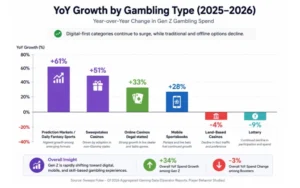
Gambling spend among gen-z is primarily concentrated across three areas; each category has seen double digit growth year over year.

genz.guide3

  1. Sports betting: Same game parlays and live in-play bets account for almost half of all wagers placed by gen-z consumers. Gen-z bettors are more likely to place individual bets per session than any other age group.
  2. Sweepstakes casinos: Games offered that allow players to win cash or prizes via a random drawing are dominant on sweepstakes platforms. As such, these types of games represent nearly 80% of overall activity. Gen-z players also frequently engage with tournament format sweepstakes, which creates social competition layers that resonate with gaming-native users.
  3. Online casino (legal states): Gen Z is one of the fastest growing segments for live dealer games in New Jersey, Michigan, Pennsylvania, and all other regulated i-gaming states. Live dealer blackjack specifically indexes heavily with players between the ages of 21-30 who desire the atmosphere created by table games but do not want to travel to a physical floor.
  4. Daily fantasy & prediction markets: Both emerging formats blend skill elements with financial stakes and have found a disproportionately young audience. Participation in prediction market platforms from gen-z increased more than 60 percent between 2024 and 2026.

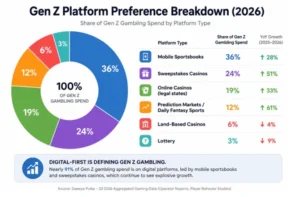
Gen Z Platform Preference Breakdown (2026)

Platform TypeShare of Gen Z Gambling SpendYoY Growth
Mobile Sportsbooks36%+28%
Sweepstakes Casinos24%+51%
Online Casinos (legal states)19%+33%
Prediction Markets / DFS12%+61%
Land-Based Casinos6%-4%
Lottery3%-9%

genz.guide4

What Boomers Are Still Doing

To clarify: Baby Boomers aren’t leaving the gaming space. Boomers make up nearly half (nearly 50%) of all adult buyers of lottery tickets annually; they represent the primary market base for land-based slot floor activity; and they continue to be the primary daytime demographic for tribal casino operations throughout the United States. While there may be some decline in spending from Boomers, it’s really about relative decline.

As the gaming category has grown by a large margin during this period, the number of Boomers participating at various levels of spend and their percentage share of total spend has declined slightly. Where Boomers’ participation has been more resilient than anticipated is at higher stakes table games and slots on a land-based basis. Spending per visit at these products continues to exceed that of other age groups. The problem for operators going forward will be that Boomers are visiting less often due to changes in their mobility and health status; and the pipeline of new older gamers entering the gaming market to replace those exiting is significantly smaller than the pipeline of new young adult gamers who are entering the market.

The Responsible Gambling Challenge This Creates

The spending crossover will come with a responsible gambling aspect the industry can’t ignore.

  • Around 15% of 18-30 year olds reported they gamble on at least one high risk activity during the last year.
  • Severe economic loss due to gambling by young adults has gone up as well as participation in sports betting.
  • 21-25 year olds are exposed to most sports betting ads because this demographic has very little disposable income and also has not yet developed adequate financial literacy.
  • Population-based problem gambling screening tools and interventions are typically geared towards an older population, and therefore, may not be appropriately calibrated for Gen Z’s gambling habits.

Several state regulators are already identifying these trends. In several states legislative discussions regarding iGaming expansion in 2026 and beyond are focused more heavily on mandating responsible gaming tools (such as limit setting) and advertising limitations near college campus locations. A number of sweepstakes platforms have implemented artificial intelligence (AI)-based player tracking to monitor gambling behaviors, which includes prompting players to establish limits themselves. According to the platform operators, this type of self-imposed limit setting appears to be used by younger gamblers at higher rates than other age groups.

How Operators Are Responding

The move away from an older demographic of gamers has caused companies in the gaming space to reassess how they operate. Companies are now changing the way they produce products, market those products, and deliver new technologies based upon what young adults want.

Companies are developing products at a quicker rate and more socially.

Operators are now prioritizing shorter game cycles, in-session tournaments, leaderboards, and chat functionality when it comes to sports books and sweepstakes platforms designed for younger players. The use of the sweepstakes tournament style has been exploding since 2025 and 2026 as younger players’ preference for competitive and community-style play was realized by platforms; these elements drive player retention better than just bonus coins falling into players accounts.

Platforms are redesigning payment systems to be faster.

Young adult gamblers are willing to wait little to no time for withdrawal. Fast payouts using PayPal, Venmo, or cryptocurrency have become a necessity to win the younger gamer’s wallet. Most operators who experienced strong Gen Z growth during 2026 cited fast payouts as one of the top reasons why customers exited in exit surveys.

Advertising dollars are moving towards Gen Z media outlets.

Gaming companies are paying to advertise on podcasts, partner with popular streamers, add Tik Tok advertising campaigns, and partner with athletes/influencers to grow their brand with Gen Z. Gaming companies that were able to position themselves inside the mediums Gen Z uses daily (i.e., podcast ads) and not interrupting the medium they consume daily (traditional television/radio ads) are experiencing some of the most rapid growth among this group.

Operator Strategy Shifts in Response to Gen Z Growth

Focus AreaBoomer-Era ApproachGen Z-Optimized Approach
Acquisition ChannelTV, Print, Land-Based FloorStreaming, Influencer, Social
Product FormatLong Sessions, Loyalty TiersFast Cycles, Leaderboards, Tournaments
PaymentsCheck, ACH, CardInstant PayPal, Crypto, Venmo
Responsible GamingOpt-In Self-ExclusionAI Monitoring, In-Session Prompts
Sweepstakes InvestmentLow PriorityCore Growth Channel

Looking Ahead: What the Crossover Means for the Market

The generational spending crossover represents an inevitable demographic trend: Generation Z is the largest currently living generation within the U.S., and this cohort has yet to mature fully into its prime earning years. Over the course of the next ten (10) years, Gen-Z’s “gambling wallet” is expected to be significantly larger than it is today. Those operators who have developed strong brand equity with Gen Z now, are preparing themselves for substantial long term share of a cohort that will ultimately define the industry throughout the 2030s.

Boomers have a different outlook. While continued participation in both land-based casinos, and the lottery markets appear probable; there does not seem to be much hope for reversing the structural decline in their share of total gambling spend. For those platforms which have grown their entire business based upon the boomer customer profile, they will either need to develop new younger audiences, or begin to manage a gradual decline in their addressable market.

By the end of 2026, the total gross revenue for the U.S. commercial gaming market is expected to surpass $67 Billion. Increasing portions of that number are coming from customers who are discovering how to gamble using their smartphone. This shift is now officially underway and the face of the industry will never again be the same. Sweepspulse.com will continue to track the changing demographics and trends as they relate to each age group, and the potential impact of these trends on Sweepstakes and iGaming platforms.


subscribe-us
Sign Up for the Hottest Sweepstakes Casino Deals

Unlock FREE, Exclusive Bonuses delivered straight to you – only from SweepsPulse.

This website requires you to be 21 years or older to enter

0